Decoration Guide
Beginner’s Handbook:
Choosing the Right Printing Method for You
In this article, we’ll look into the differences between screen printing, DTG (Direct to garment) and embroidery and the designs they work best with.
Screen Printing:
What is screen printing?
Screen printing is a printing method where ink is pushed through a woven screen (also called mesh stencil) onto fabric on a round press. The ink doesn’t soak into the fabric, but lays on top of the product. With screen printing, a special screen has to be made for each element of your design. Once that’s done, the colors and elements of the design are applied layer by layer onto the garment. More layers take longer to print and need careful setup to ensure a quality print.
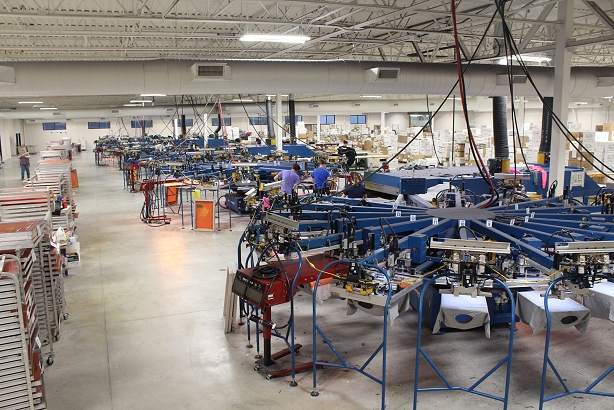
The long setup time is why screen printing is primarily used to print items in bulk. It’s not cost-effective to print only a t-shirt or two if it’s taken hours to create the stencils for your design.
What type of designs work best with screen printing?
Screen printing works best for solid graphics without small details. Think basic typography, geometric designs, symbols, and shapes. That’s because making stencils for intricate designs is time-consuming and it’s difficult to get the details right during the printing process.
Since each color is applied separately, screen printing is also mostly used for designs with few colors. Print providers often limit how many colors you can have in your design, and usually no more than 9 are allowed.
Is screen printing the right choice for you?
Screen printing can be cost-effective for designs with simple graphics (ideally with only a couple of colors).
The final price of your screen printing bulk order is based on the number of colors in your designs which add to the “run charge” (the cost of printing each garment) and the screens needed to print each color.
Direct To Garment (DTG):
What is DTG printing?
Direct-to-garment, or DTG, is a printing method that sprays the ink onto the garment. The ink then soaks into the fibers of the garment. It’s like printing on paper, but on clothing.
A main advantage of DTG is that it’s easy to print low quantities because there’s almost no setup time or you can still order in bulk if that’s what you require.
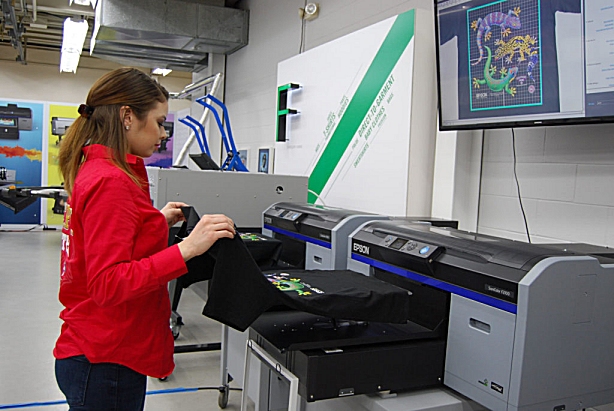
Another benefit is that the technology of DTG printers offer a lot of color options which means you can print detailed designs and photorealistic images with almost no color limitations.
The thing to avoid with DTG is transparencies. Elements that are less than 100% opaque (solid) don’t translate well in DTG printing—printers will attempt to make up the missing color by spreading the ink, causing the fabric to have a lot of gaps. That’s why it’s best to use solid colors.
Other than that, you can work with detailed designs and color patterns as much as you wish. For best results, we suggest creating graphics in the sRGB color profile since it matches DTG printer color possibilities the best.
Is DTG printing the right choice for you?
Direct-to-garment printing is a hassle-free way to get a garment printed. With DTG, the entire design is printed in one go. And since DTG doesn’t have a color count, there’s no extra setup time to start printing, so your order gets fulfilled with no setup time, burning screens or mixing inks.
Heat Transfer:
What is a heat transfer?
An image is printed onto transfer paper rather than directly onto a garment. The specially formulated transfer paper has a smooth surface that serves as a medium for the ink. The heat press machine then transfers the image from the paper to the garment.
By using high temperature and heavy pressure for a certain amount of time, a heat transfer printing machine permanently embeds an image onto a garment.
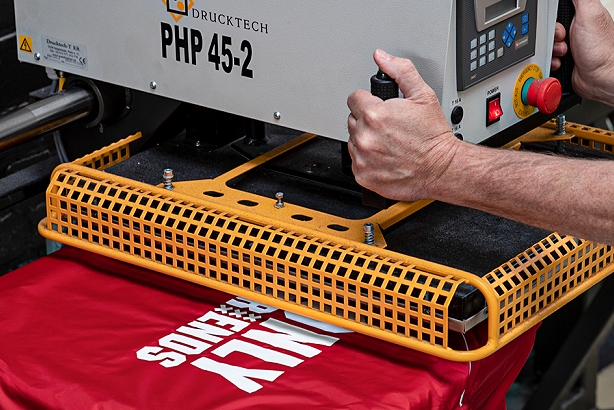
Heat presses print quickly and economically without sacrificing quality. The machines are capable of printing complex, vivid, and full color images that offer excellent image resolution. Heat press transfer printing is cost-effective for large runs since they avoid having to mix inks or setup screens. However, due to the nature of the process, prints do not have the long life chemical bonding that screen printing and DTG offer and could fade with several washes. Transfer prints are stiff, making the fabric firm and ironing prints will ruin the image since they are high temperature sensitive.
Is a Transfer Print the right choice for you?
Transfer prints offer a large palette of accurate colors that are applied to the garment. This method is a low cost option for multi color prints or when single colors are difficult to print because of the garment limitations. Hats are often transfer printed because of the curve of the visor or front panel.
Embroidery:
What is embroidery printing?
Embroidery uses a specialized machine to sew thread onto a garment. Most tee shirts, sweatshirts, hoodies, jackets, hats and beanies can be embroidered. The great thing about custom embroidery is that you can also choose fabrics and patterns, such as tie-dye or denim, that are not suitable for other design techniques. Because of the way embroidery machines work, small details and gradients don’t translate very well, but are suitable with solid shapes and color blocking.
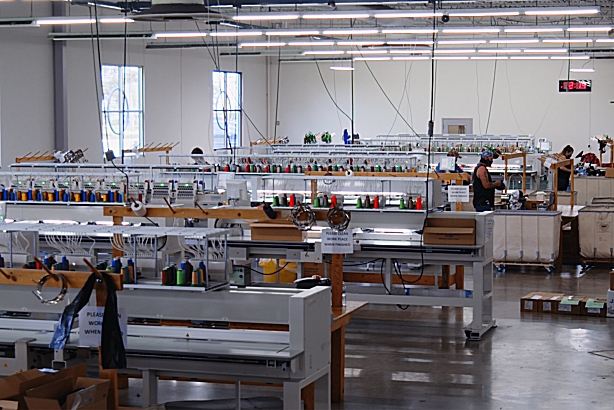
Embroidery offers a lot of thread color options which means you can print multi color designs with one setup charge.
The thing to avoid with embroidery is fine detail since the thread won’t capture those elements.
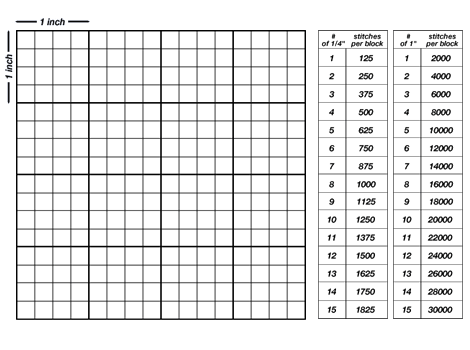
Embroidery prices are calculated by area commonly referred to as thread count. The larger the area to be embroidered, the more threads needed and the higher the cost.
How many Embroidery stitches in my design?
Use the following guide to estimate the stitch count for your logo embroidery:
- Small Logo: 1 to 7,500 Stitches
- Medium Logo Size: 7,501 to 15,000 Stitches
- Large Logo Size: 15,001 to 25,000 Stitches
- Extra Large Logo Size: All embroidery over 25,000 Stitches.
Left chest designs tend to be no more than 3-1/2 ” square inches. One solid square inch of embroidery = approximately 2,000 stitches:
Is Embroidery the right choice for you?
Embroidery is a great way to get a textured, long lasting design on your garment. With embroidery the entire design is sewn in one go. And since embroidery doesn’t have a color count, there’s no extra setup time to start sewing, so your order gets fulfilled with no setup time, burning screens or mixing inks.
Bottom Line:
Which is better: Screen printing, DTG, Transfer Printing or embroidery?
Screen printing, DTG and Transfer Printing yield fine quality prints, but they differ in method and cost. Screen prints are the most durable and economical in large quantity. DTG is better suited for lower quantities, while transfers are best for difficult to print items. Embroidery is the winner for longest life but at a greater cost.